Volume & Issue: Volume 14, Issue 2 - Serial Number 26, December 2023, Pages 1-441 
Number of Articles: 24

Strategic requirements for improving the self-organizing capacity of cities for smarter urban development; Case study: Ahvaz metropolis

Pages 5-21

https://doi.org/10.30475/isau.2023.338329.1912

Mahyar Sajadian, Mohamad Ali Firoozi, Ahmad Pourahmad

Abstract Extended Abstract
Background and Objectives: Today, smart cities are a new paradigm in the global urban planning system. Based on the capabilities of information and communication technology, these smart cities try to improve the quality of life in places which are immersed in numerous problems with social, economic, environmental and other dimensions. However, a comprehensive, multidimensional, complex smart city is based on the urban planning paradigm of complexity and chaos which can lead to successful planning and management. The present study, from the perspective of modern chaos theory, is aimed to formulate strategic requirements for the realization of the smart city in Ahvaz metropolis.
Methods: This article is in the category of applied-developmental research, which is question-based. It has been accomplished using bibliographic and survey method, using exploratory factor analysis, one-sample t-test and Friedman ranking test in SPSS software. The survey instrument was a 5-point Likert questionnaire whose final content validity was confirmed by professors and its reliability was confirmed by Cronbach’s alpha coefficient of 0.906. The statistical population consist of the experts of the institutions involved in the smartening process of Ahvaz metropolis. A combination of clustered snowball sampling methods and monitored network was used in this research. Finally, 380 questionnaires were completed. The adequacy of the number of samples was confirmed by KMO method.
Findings: Based on the findings of the research, in relation to the theory of chaos, it is possible to conclude that Ahvaz metropolis is affected by the non-linear effect in the smartening process; also, the butterfly effect is significant in this metropolis. Moreover, in connection with the modulating variable of the power of universities and research institutes, sensibly, it can be accepted that the condition of this component is also not inappropriate. Using Friedman’s ranking test, the authors ranked the components and indicators including the butterfly effect of social and ethnic pluralism, social moderators, steady flow of energy, people, non-linear effect, variable modulating power of universities and research institutes, contexts, structural forces, institutional forces. Finally, the use of communication and information technology capabilities in promoting environmental quality (motivators) are located.
Conclusion: Based on the results of the research, nonlinear effects govern the process of smart city development in Ahvaz significantly. This implies that a nonlinear system, influenced by variables such as conflicting interests, developmental contradictions, ownership conflicts, and the level of technology acceptance by the public, dominates the realization of the smart city in Ahvaz. These factors have led to turbulent conditions in this metropolis. In this context, the impact of two key factors, namely, government and oil, on this process and system, as well as the central-peripheral dynamics shaped in the country, particularly in connection with the oil-rich city of Ahvaz, cannot be overlooked. As many researchers have emphasized in their studies, the government has commercialized money and capital in the cities through the vast banking system. It has helped the expansion of cities and urbanization more than ever. This extensive and unmatched influence of the government originates above all from the way of obtaining its revenue sources, i.e. the export of crude oil, the resulting national surplus has an important contribution to the accumulation of capital and expanding reproduction in the economic process of the country. In such an atmosphere, the military creation of the center and the periphery has caused the emergence of an unbalanced national development model. Therefore, as observed in the analytical research model, the government and oil entities, in addition to their impact within the framework of internal structural institutions of the Ahvaz metropolis, are considered external influential factors in the overall drivers of smart city realization in Ahvaz. The presence of these two entities, due to their interactions with each other and the factors of conflicting interests, developmental contradictions, ownership conflicts, and the level of technology acceptance by the public, intensifies the nonlinear effects in the process of smart city development in Ahvaz. Inside, the stimuli have stimulated the drives and the drivers - based on the theoretical foundations of smart cities - with the goal of achieving a more efficient, sustainable, livable and fairer city in an urban framework with dimensions of smart environment, smart life, smart economy, smart mobility, smart governance and smart people to mobilize resources and facilities. But in the meantime, the factor of social and ethnic pluralism as a factor with a butterfly effect can be effective in this movement from drivers to a smart city. Also, in this transformation, two social moderator variables and the power of universities and research institutes are effective in this movement. In addition, the internet access flows as a constant flow of energy on the entire system.
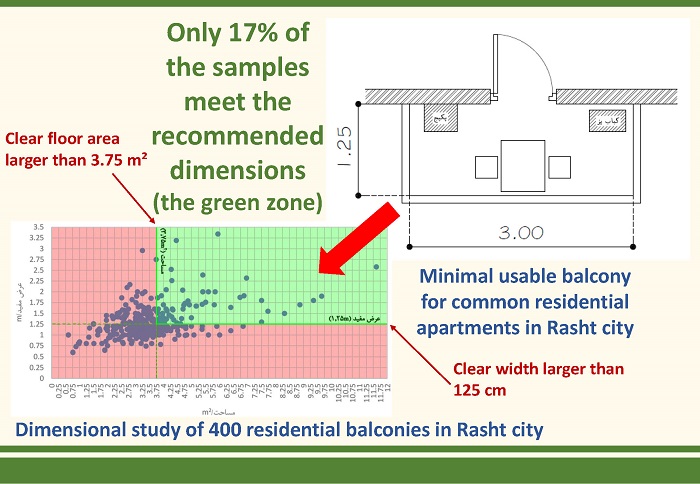
A regulation for minimum mandatory dimensions of balconies in residential apartments in the city of Rasht from the perspective of spatial usability

Pages 23-38

https://doi.org/10.30475/isau.2023.337572.1906

Mojtaba Pour Ahmadi, Reza Sedighi

Abstract Extended Abstract Background and Objectives: Today, for various reasons, a small and inadequate floor area is often allocated to private semi-open spaces in apartment housing in Iran. This allocation results in a significant reduction in the efficiency of these spaces. Consequently, the potential of the space to accommodate the daily presence and use by the residents is almost lost. The present study aims to specifically address this issue from the perspective of the development control system and to consider the role of building regulations in ensuring the minimum acceptable usability of these spaces.
Methods: In this research, in the first step, 10 international examples of building codes related to the minimum allowable dimensions of residential balconies in some developed countries of the world including England, Ireland, Australia, Singapore, Japan, Dubai, Luxemburg, and the Netherlands are studied and an attempt is made to identify the logic of calculating these values. In the second step, a review of building codes related to the minimum dimensions and floor area of semi-open private spaces in the current development control system of Iran and specifically the city of Rasht is performed. In the following, an attempt is made to provide a definition of the “usable minimal balcony” for the city of Rasht and to calculate its required area and dimensions. In the next step, the current status of balconies design in the apartment housing in Rasht is examined. To do this, the apartment plans approved by the plans control department of the Iran Construction Engineering Organization (IRCEO) of Rasht City were used and we examined all the apartment housing plans of three floors and above, which were approved in this organization in the period of three months from January to March 2021. During this period, 340 apartment units with a total of 401 balconies were approved by the organization. In the final step, an attempt was made to make a comparison between the minimal balcony dimensions defined in the present study and the existing balconies in the statistical community.
Findings: Based To define the minimal usable balcony dimensions, the specific conditions of the target community must be considered. Otherwise, the possibility of enforcing this rule will be reduced. It should be noted that currently in the city of Rasht, there are no regulations regarding the minimum dimensions of these spaces. On the other hand, the current common dimensions of balconies in the housing market of Rasht City are significantly smaller than the standards of the studied countries. This has its own economic, social, and cultural reasons and the study of these issues is outside the scope of the present study. However, it can be concluded that the required dimensions and floor area of the balcony in Rasht apartment housing should be defined as smaller than the countries studied. Based on these considerations, the required dimensions of balconies depend on the number of bedrooms, the number of people living in the residential unit, and, in some cases, the geographical orientation of the balcony in the studied countries. However, in the present study, the minimum dimensions of the balcony in all apartment units are considered a fixed value. Thus, an efficient minimal balcony is considered one that has the necessary area for the installation and proper operation of a small set of a table and chairs for two people, a barbecue, and a gas boiler. Accordingly, the standard is formulated as follows: “In every residential apartment unit, it is necessary to provide a balcony with a minimum clear width of 1.25 meters and a minimum useful floor area of 3.75 square meters.”
Conclusion: Based on the findings of the survey, it can be concluded that, firstly, a small percentage of the current balconies have the required area for proper use by residents. This is due to the small and unsuitable dimensions of these balconies. To be more precise, in one-bedroom residential units, only 16%, in two-bedroom units, 11%, and in three-bedroom units and more, 25% of the balconies can accommodate a table and chairs for two people, a gas boiler, and a barbecue. This finding is in line with the findings of researchers who, based on their qualitative research, have introduced inadequate dimensions of balconies as one of the main reasons for the inefficiency of balconies in apartment housing in Iran today. Secondly, it will have a relatively better perspective for application in the Rasht development control system, if regardless of the number of bedrooms in a residential unit, the minimum standard dimensions and area for balconies is formulated as a minimal two-person balcony. Currently, the proportion of two-bedroom units with a minimal four-person balcony is only 7% of the total (compared to 11% for two-person balconies) and the proportion of three-bedroom units with a minimal six-person balcony is only 11% (compared to 25% for two-person balconies).

Measuring the psychological restoration of visitors in urban parks regarding their spatial configuration; Case study: Eram Park in Hamedan

Pages 39-58

https://doi.org/10.30475/isau.2023.352419.1953

Pooria Saadativaghar, Esmaeil Zarghami

Abstract Extended Abstract
Background and Objectives: The psychological restoration is considered one of the important psychological variables among those who refer to urban parks. In Iran, this category has received less attention. Besides, the level of psychological restoration of visitors in different natural environments is not the same. In this research, the rate of psychological restoration in various areas of urban parks are compared and a valid, and indigenous tool to measure the rate of psychological restoration was introduced (Restoration Scale Localized Questionnaire: Rs) in these environments.
Methods: The strategy of this research was logical reasoning, and its tactic to evaluate the spatial configuration of urban parks was the Space Syntax method. In the space configuration analysis section, using the Space Syntax method, the parameters of connectivity, integration, depth, control, line length, entropy and intelligibility of the entire park bed (and especially in selected points) were analyzed. Moreover, in the section of measuring the mental state of citizens referring to urban parks, standardized and localized RS (restoration scale: The main output of the present research is also the introduction of this localized standard questionnaire in Persian language), and finally using statistical analysis to express the relationship between the spatial classification and psychological restoration of citizens (In fact, the park consists of two main geometric and organic parts, and in a number of points of both parts, the state of configuration variables and psychological restoration of citizens using a localized questionnaire was calculated and investigated).
Findings: The results of this research showed that the parameters of connectivity, integration, entropy, control, line length and intelligibility in geometric part are more favorable than organic part, but the depth of organic part is more than geometric part. The results of the mean comparison test also showed that the variables of depth and intelligibility have significant differences between the two geometric textures, but no significant difference was observed between the other parameters of the spatial configuration in the two textures. In addition, the results of the mean comparison test show that the depth of the geometric texture is lower than the depth of the organic range, but the intelligibility of the geometric texture is higher than the organic texture. Also, the analysis of relationship between spatial configuration and restoration due to the coefficient of determination showed that 46.8% of the changes in (psychological) restoration variable are related to spatial configuration variables and the restoration changes are mostly related to depth, control and entropy variables. The results of investigating the effect of spatial configuration variables on each dimension of mental (psychological) restoration also showed that 38.9 percent of the changes in the emotional dimension are related to spatial configuration variables, and this relationship is generally significant, more detailed analyzes of this parameter prove it that the relationship between intelligibility and line length variables was not significant and these variables did not have the ability to predict the restoration variable and the restoration changes are mostly related to connectivity, depth, control and entropy variables. Also, 38.3% of cognitive dimension changes are related to spatial configuration variables, and this relationship is significant. More detailed analysis of this parameter also revealed that the relationship between connectivity, control, intelligibility and line length variables was not significant and these variables could not predict the restoration variable, and the restoration changes are mostly related to the depth and entropy variables. In addition, 43.5 percent of the changes in the behavioral dimension are related to spatial configuration variables, and this relationship is significant, more detailed analyzes of this parameter also show that the relationship between connectivity, control, intelligibility and line length variables was not significant and these variables could not predict the restoration variable, and the restoration changes are mostly related to the depth and entropy variables.
Conclusion: Based on the findings of this research (and supplementary studies), the design of parks with secluded and uncrowded spaces, and minimal disorder in the layout (in terms of spatial aspects), which minimize visual (and motor) control and permeability, is recommended for the improvement of the spatial configuration of city parks. This is proposed to enhance the mental health of park visitors. This suggestion is directed towards researchers, decision-makers, and urban planners and designers in urban design and landscape.

Role of multisensory experience in the presence of spaces using Neuroscience methods

Pages 59-79

https://doi.org/10.30475/isau.2023.321713.1838

Bahar Majlece, Mojgan Khakpour, Abbas Tarkashvand

Abstract Extended Abstract
Background and Objectives: Merleau-Ponty’s theory, rooted in the embodied nature of human experience, suggests that when humans interact with others or their surroundings, they utilize their senses to form a coherent whole. This idea extends to the theory of multi-sensory perception of the environment by Pallasmaa. Therefore, the quality of the environment and the desire of people to be present in it, along with a set of other factors, is highly dependent on how it is perceived by humans. The success of spaces depends on the frequency of use and the sustained presence of people in that place. In the contemporary era, there is a noticeable decline in the presence of spaces, as indicated by various factors listed in recent research. It is necessary to know the criteria that create and promote presence in spaces, a presence that evokes the meaning and sense of place, in order to enrich the environment and the continuity of the event on an individual and collective scale. In this regard, the current research, relying on the theory of multisensory perception in architecture, tried to show that there is a positive relationship between the multisensory perception of spaces and their presence. At the same time, there is no doubt about the multi-sensory nature of the human perceptual mechanism in the process of interaction with the environment. However, there is not much information about the effect of these sensory perceptions, independently or in combination, on the user’s experience of the environment. The few research conducted in this framework indicate that the emphasis on the centrality of the sense of sight in the creation of spaces, mainly leads to the abandonment of other senses and a deficiency in the coherent sensory perception of the space, which itself, potentially, shows the possibility of reducing the presence of the space for the user.
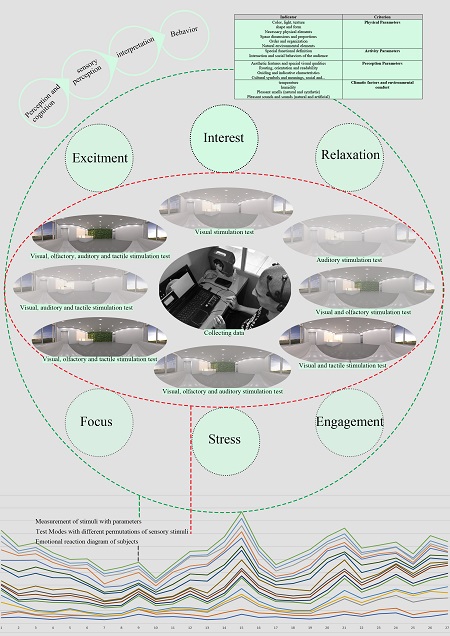
Methods: In this framework, the current research attempts to answer the question of which sensory stimuli in the environment, whether alone or in combination with each other, contribute to making the environment more present for those who experience it. A test was conducted to quantify the impact of stimulating the senses separately and in combination with the pleasantness of the space as an index of its presence. The subject group comprised 20 volunteers aged between 20 and 35, exhibiting a symmetrical gender distribution, and possessing bachelor’s and higher education levels. Volunteers were placed in a singular architectural space, simulated for them through virtual reality arrangements. They experienced four sensory stimuli (sight, hearing, smell, touch) both separately and in combination. At the same time, the emotional reactions of their brains to these stimuli were extracted and recorded in the form of 6 quantitative indicators, which include engagement, excitement, focus, interest, relaxation and stress, using the Emotiv EPOC+ device and in the Emotiv BCI software environment. Also, the level of pleasantness of the space for them was also recorded, based on their self-report, in a 5-point Likert scale. The resulting data were subjected to qualitative and quantitative analyzes and tests in terms of the possible correlation between sensory stimuli and the pleasantness of the space.
Findings: The findings of the research indicate that in indoor spaces, the presence of visual stimuli such as light, olfactory stimuli such as the smell of plants, and environmental tactile stimuli such as a gentle breeze have an observable effect on the pleasantness of the space and will make people more willing to stay in it. On the other hand, the research results have confidently demonstrated that auditory stimuli in the interior, particularly those with an unknown source and non-aesthetic sounds, are undesirable. However, non-passive vocal stimulation (with sounds of aesthetic quality) may have other results. Summarizing the findings makes it clear that in indoor spaces, the combination of visual, olfactory and tactile stimuli will increase the pleasantness of the space with a high degree of certainty. Also, with the aim of increasing the pleasantness of the space for the user, it is better to control tactile stimulation and minimize auditory stimulation - with an unknown source. 
Conclusion: It is necessary to know the factors that create and increase presence in spaces, a presence that evokes the meaning and sense of place, the degree of prosperity to the environment and continuity in individual and collective characteristics. In this regard, the current research, relying on the multi-sensory theory in architecture, tries to take a positive ratio of spaces and their presence. In general, the research findings suggest that enhancing assimilation in bodily perception and experience of space, such that spatial perceptions are not monosensory, visibly increases the pleasantness of the space. This is likely to contribute to the improvement of presence in the spaces.

Sensory perception patterns affecting the sense of place attachment in the design of special needs schools

Pages 81-93

https://doi.org/10.30475/isau.2023.334001.1897

Zahra Ajali, Zohreh Torabi, Hooman Sobouti

Abstract Extended Abstract Background and Objectives: This research is based on an applied objective. Applied research uses theories presented in fundamental research to solve real-world problems. The current research was carried out with the aim of identifying the indicators of sensory perception on the sense of place attachment and also the effect of each of the indicators, prioritizing the indicators affecting the sense of belonging of the students and compared to the set goal. One of the most important questions that the current research seeks to answer can be stated as: How can formative elements affected by sensory perception patterns in the special needs schools be formulated as design standards as a comprehensive model? In response to the research question and considering the practical objectives, the study proposes models based on the necessary guidelines and standards for the construction and design of special needs schools intended for the construction and reconstruction of future schools that have undergone changes for this purpose.
Methods: This research utilizes a combination of quantitative and qualitative methods for theoretical studies, presenting qualitative criteria and indicators. The methodology involves gathering using a bibliographic research method and reviewing existing documents through direct observations, document analysis, and interviews with experts. The quantitative data was collected in a survey platform, which was used to answer the research question with the approach of preparing a questionnaire. The collected data was adjusted according to the Likert scale, and KMO and Bartlett statistics were used to check the validity of the questionnaire. The findings were analyzed by the structural equation modeling (SEM) method identifying the relationships between the variables and their impact in the studied schools by SPSS and Amos software. The sampling method in this research is a two-stage cluster type, and then a random sample is used to select schools.
Findings: The research findings indicate that when scrutinizing factors associated with sensory perception components, it becomes apparent that visual senses, with a factor load of 0.943, are of greater significance for students compared to other sensory components. Also, within the factors contributing to place attachment, the social interaction component, with a factor load of 0.994, plays a significant role in fostering a sense of place attachment and overall satisfaction. Regarding the reliability of the research questionnaire, a pre-test was conducted by distributing 50 questionnaires among the statistical population. The obtained Cronbach’s alpha index for the variables and their dimensions is reported. Data was analyzed by SPSS Ver.16 software and Cronbach’s alpha index for the whole is equal to 0.913, which shows an appropriate reliability of the research questionnaire. In examining the relationships between the variables, the results of the hypotheses showed that there was a statistically significant relationship between the research variables. Based on the results and information obtained from the findings and the environmental impression of the studied schools, the qualitative results of the most important things that can be emphasized as components of sensory perception and place attachment for the design of these schools have been stated. 
Conclusion: Most learning takes place through formal education in schools. To facilitate this process, students require a foundation of rich emotional experiences and a sense of connection with both their physical and social environments. Neglecting to involve all sensory aspects within a space can diminish the concentration of these students in establishing effective environmental communication. So, it is necessary to design the appropriate environment by considering the effective factors, such as the existence of the necessary stimuli and motivations, and adapting to the students’ cognitive and perceptive abilities. In the current research, the influence of sensory perception indicators on the sense of place attachment in schools that have been changed into special needs schools and used by special needs students with special conditions has been investigated. Based on the results acquired and the identification of essential sensory perception factors crucial for these students in understanding and connecting with the environment, as well as fostering a sense of place attachment, which plays a significant role in their attendance and desire to return to school; principles and suitable patterns for designing a special needs school have been outlined. As a result, design standards were presented in order to recreate the indicators of sensory perception and to strengthen the relationships and social interactions of students, which is considered as an important factor for their sense of belonging to the school, to guide the designers.

Achieving the components of evaluation and selection for the best method of intervention in the restoration of architectural heritage based on international conservation guidelines

Pages 95-115

https://doi.org/10.30475/isau.2023.316523.1811

Vahid Zatakram, Ali Zamanifard

Abstract Extended Abstract Background and Objectives: Due to the existence of diverse values in their original nature, historical monuments should be conserved for future generations. Preserving these structures against natural threats and preventing wear due to their extended lifespan represents a widespread approach to architectural heritage. This involves integrating them into the natural life cycle, where restorative interventions bring about necessary changes. Restorative interventions meet challenges in the conservation of monuments, given concerns about their impact on the monument’s survival, as well as the conservation of authenticity and heritage values. Consequently, restorers often tackle with difficulties in determining suitable restoration methods and techniques. Therefore, it seems that restorers need components to facilitate the evaluation and selection of appropriate restoration methods and techniques and reduce the problems they face. The best framework for attaining these components lies in the principles and guidelines outlined in international conservation documents, which have emerged from expert meetings in this field over the past decades. Unfortunately, these resources appear to be rather disregarded and overlooked, particularly beyond mere theoretical discussions. For this reason, and considering the importance of the subject, achieving the components of evaluation and choosing the appropriate method of restorative interventions in the architectural heritage based on the content of the international conservation documents has been chosen as the main goal of the research.
Methods: The research is considered an applied research since it aims to facilitate the application of theoretical foundations and the development of a conceptual framework related to restorative interventions in architectural heritage. Also, the research has a qualitative approach and benefits from the inductive strategy. The path of conducting research is determined by collecting partial data to achieve a general goal. In this regard, the necessary data for the research has been gathered through the bibliographic research method, and the analysis of the information involves content analysis, utilizing MAXQDA software. In other words, within the realm of international conservation documents, the ones specifically addressing the conservation of architectural heritage were initially selected. Subsequently, the content of these documents was examined, focusing on the methods employed for conservation and restoration in architectural heritage. Finally, pertinent provisions were systematically coded using content analysis software. After refining and categorizing the extracted codes, the components and sub-components related to the appropriate interventions in the restoration of architectural heritage in different collections were introduced.
Findings: The research outcomes encompass 39 components distributed across four groups: evaluation components for intervention goals with a focus on conserving heritage values, preserving originality and cultural significance of the site; evaluation components for logic, appropriateness, and the process of action; evaluation components for the level and type of intervention, particularly emphasizing reversibility and minimal intervention; and components for the final assessment of the chosen intervention. 
Conclusion: In establishing the objective of a restorative intervention in this domain, the goal may take diverse forms, such as preserving authenticity, maintaining quality and integrity in the work’s values, safeguarding the cultural significance of the site, ensuring overall integrity and stability, and meeting public needs or advancing knowledge. However, in line with continuing recommendations from the examined documents, an effective restorative intervention prioritizes the conservation of heritage values and tries to maintain maximum authenticity in architectural heritage. Therefore, choosing other goals, especially with economic motives, can divert the intervention from its desired direction and dimensions. In the context of the logic of intervention, the presence of convincing evidence of technical and financial justification and the possibility of any profit or loss resulting from the intervention seems necessary. The intervention should be in proportion to the status quo and the text and context of the work, the available facilities, the limits of the restorer’s competence, the level of risk threatening the work, and management policies. In terms of the process, the intervention should be based on detailed previous planning and have a multifaceted approach. Also, a balanced and unbiased attitude towards different parts of the work is recommended. Relying on theoretical foundations and incorporating a risk reduction process are additional facets within this domain. Finally, the intervention needs a cyclic process for the possibility of correction and recovery. In evaluating the required level of intervention, components such as the level of the cultural significance of the place, reversibility, minimal intervention, the existing condition of the work, the level of usable facilities, the value level of the work, and its use will be effective. It is important to emphasize that priority will be given to traditional techniques, favoring indigenous methods and the perpetuation of traditional approaches. Modern techniques should only be employed in restoration interventions when the inadequacy of traditional methods has been established and additional criteria, such as the presence of technical and scientific support, similar experiences in less critical structures, conservation and environmental benefits, sustainable material supply, and energy efficiency, can be met by these modern techniques. Finally, the ultimate assessment of the intervention involves evaluating the sensitivity and finesse of the measures taken, the existing capacity for implementation, maintenance, and future control, the level of knowledge available for the action, the extent of its impact on the elements and components of the effect, and its influence on the cultural significance. Additionally, a reassessment is conducted considering the long-term economic, social, cultural, and environmental consequences of the intervention.

Analysis and evaluation of effective indicators on the realization of a healthy city; Case study: Rasht city

Pages 117-128

https://doi.org/10.30475/isau.2023.320826.1835

Saber Mohammadpour, Arman Hamidi, Hamidreza Sabouri

Abstract Extended Abstract
Background and Objectives: The purpose of this research is to evaluate the indicators of a healthy city in Rasht in and finally to examine the relationships between the indicators of a healthy city, including identifying the most important factors affecting the realization of a healthy city. For this purpose, the city of Rasht has been chosen as a case study in this research.
Methods: The current research is considered an applied research in terms of purpose and, according to the method of answering research questions, it is considered a descriptive-quantitative research. In this study, the information was collected through surveys and documents. In order to investigate and evaluate the indicators of a healthy city, a questionnaire with a 5-level Likert scale was designed. The information obtained from the questionnaires was analyzed and evaluated by SPSS software. First, in order to confirm the accuracy of the questionnaire, the value of Cronbach’s alpha was checked, and this value with a coefficient of 0.913 indicated the very favorable and reliable internal validity of the questionnaire questions. Then, by using binomial tests, Pearson correlation and linear regression test, the findings have been analyzed step by step. The sample size was calculated using Cochran’s formula of 384, according to the population of Rasht in the latest population and the housing census in 2015, that was reported to be 679,995 people.
Findings: According to the average results of the indicators, the “housing quality” index has the highest average value of 3.12. On the other hand, the “organizational-managerial” index has the lowest average among the indices, with an average of 2.52. Also, according to the average results of the research items, the item of “residential unit’s access to facilities such as water, electricity and gas” from the housing quality index has the highest average with a number of 4.15, as well as the item “the existence of special bicycle paths in the place of residence”. The environmental and physical index with an average of 1.93, they have the lowest average among all items. And finally, the average of all items in the current research is equal to 2.86. Then, a step-by-step regression test was used to investigate the relationship between the “health and hygiene” index and other research indicators. At first, by entering the index of “health and sanitation” as a dependent index and 5 other research indices as independent indices, the effective indices identified by this test are entered into the model in order of effect. According to findings, “organization and management” index had the greatest impact on the health and hygiene of the citizens, as it was able to predict 34.4% of the variance share of the “health and hygiene” index alone with a correlation coefficient of 0.586. Also, in the fourth model, where all the effective indicators are included in the model, the model has a correlation coefficient of 0.704, which shows the high correlation between these factors and the health of the citizens; It could form 49.5% of the share of the variance of the “health and sanitation” variable. Finally, only the “economic” index has been removed from the model due to its insignificant effect on the “health and sanitation” index.
Conclusion: Based on the step-by-step regression test, firstly, the “management and organizational” index alone is able to predict 34.4% of the variance share of the “health and hygiene” index. Also, these two indicators have the highest correlation among all the indicators of this research, which indicates the continuity and high influence of these two indicators on each other. Therefore, Rasht’s urban management can place special emphasis on the topic of a healthy city and the health indicators of the citizens in its planning, in order to ultimately improve the health and health status of the city and its citizens. In the next step, the indicators of “housing quality” and then “environmental and physical” have the greatest effect on the health status of citizens, which indicates the importance of physical issues and the quality of life of citizens in addition to environmental issues. But at the last stage, the “social” index has an undeniable effect on the health index. Based on this, it is possible to improve the indicators of a healthy city with proper planning in order to increase interactions between citizens and raise the level of people’s participation in urban affairs and provide a suitable platform for the direct relationship between citizens and city officials to increase two-way interaction between them. The point to be pondered in this research is the exclusion of the economic index from the final model, which shows the insignificant and negligible impact of this index on the health status of the citizens, which indicates that this index has a lower priority than other indices, and can be a suitable subject for future research in this city.

Solutions to reduce cognitive dissonance in contemporary apartment units through adaptation of place-emotions and place-behaviors

Pages 129-141

https://doi.org/10.30475/isau.2023.333480.1892

Mina Dashti, Minoo Shafaei, Mohsen Afshari

Abstract Extended Abstract Background and Objectives: The residence, being a modest space, significantly influences the emotions of those who dwell in it. However, apartment units, in their mere emphasis on functions, ignore the emotions of the occupants and cause cognitive dissonance and anxiety by creating conflicting emotions, thoughts, and desires. The primary research inquiry revolves around finding methods to minimize cognitive dissonance in modern apartment units. The purpose of this research is to identify common cognitive dissonances in contemporary apartments through identifying the emotional and behavioral affordances of residential spaces and the adaptation of place-emotions and place-behaviors, and secondly, to provide solutions to create cognitive compatibility in these houses. So far, the emotional affordances of the environment have been implicitly expressed in the definitions of the indirect affordances of the environment, but no consistent research has been done in this regard. Indeed, studies on environmental affordances typically focus on behavioral and functional aspects. This research aims to examine how the qualities and spatial features of a residence impact residents’ emotions. It delves into the concept of emotional affordances of the environment, providing clarifications through examples.
Methods: In this study, a qualitative method and grounded theory were employed. Following a literature review on cognitive dissonance and environmental affordance, a field study was conducted involving thirty-four residents from twenty apartment units. At this stage, information is collected through interviews and photographs and sketches. Then place-behaviors and place-emotions maps were also drawn. Finally, conclusions have been made by adapting these maps. Apartment units are considered as the current model of contemporary housing in the current research. The samples were first selected from the city of Zanjan and after the pilot study, in order to verify the findings and continue the field research, samples from the cities of Karaj, Tehran, Shiraz and Tabriz were added to the research. The samples were selected from middle-class housing and mass complexes were not considered in this research. Also, the purpose of the current research was to study the middle-class housing, which has an acceptable expansion and the most frequency in the country. The research exploratory nature led to the researcher not pre determinedly defining the space characteristics in the study design. Instead, characteristics considered more crucial from the audience’s perspective in eliciting place-emotions, and those to which residents are more sensitive, were identified through interviews, extracted, and coded. Interview tools were used to collect information, and two-person interviews were chosen as the main tool for data collection in this research. In order to understand the emotional and behavioral affordances of the units, the interview questions were designed in a semi-structured way. In addition to interviews, photos and sketches have been used to draw and finally analyze place-emotions and place-behaviors.
Findings: In the theoretical part of the research findings based on the grounded research method and selective coding, three characteristics of behavioral patterns were identified, which include “types of activity (responsible, vital and optional activities)”, “scale of activity” and “time period of activity”. It was also found that the emotions related to the space can be divided into three categories of “spaciousness”, “coziness” and “memorability” under the title of the types of emotional affordances of the space. This research underscores the significance of residences having an additional dimension that encompasses place-emotions. Identifying examples of emotional affordances within residences can play a crucial role in analyzing place-emotions and mitigating cognitive dissonance. Therefore, the innovation in this research lies in expanding the theory of behavioral settings and exploring the impact of the relationship between place-emotion and place-behavior on cognitive dissonance. In the applied section of the study, the maps were analyzed utilizing the categories derived from behavioral and emotional patterns in apartment spaces. The aim was to illustrate that the repercussions of exclusively prioritizing functions and neglecting place-emotions in modern apartments can be elucidated by identifying cognitive dissonance. In the following, at three levels of “space details”, “space essence” and “connection between spaces”, design solutions were presented in order to strengthen emotional and functional affordances and resolve cognitive dissonance in contemporary residential spaces.
Conclusion: Findings show that in contemporary apartment units, place-emotions and place-behaviors do not match, and this causes cognitive dissonance and stress. To reduce these tensions and cognitive dissonance, solutions have been proposed at three levels. At the level of communication between spaces, the use of linear structure, rooms with two doors and separation of spaces are suggested. At the level of dimensions and nature of the space, solutions such as coordination of activity scale and space scale, rooms with very small dimensions, transparent walls, spaces to support optional activities and a width of at least two meters for the terrace are mentioned. In the level of details and components of the space, solutions such as natural light, emotional atmosphere around the heating sources, transparent wall on the terrace and fireplace are presented.

Development of urban furniture design inspired by nature; Case study: Street benches

Pages 143-158

https://doi.org/10.30475/isau.2023.333426.1891

Mahshid Mehreganfar, Nasser Koleini Mamaghani

Abstract Extended Abstract Background and Objectives: Throughout history, humanity has maintained a close relationship with nature. However, the rapid urbanization in recent decades has severely limited human interaction with the natural world. In the past decades, nature has often been perceived solely as a foundation of resources and its systemic ecological processes that sustain our life have been largely overlooked. This disconnection has led to a growing sense of alienation from nature and a gradual decline in people’s appreciation for the natural environment. This phenomenon, known as the extinction experience syndrome, coined by Pyle, manifests as a general apathy towards environmental concerns. Consequently, there has been a loss of support and regard for nature. This research delves into the underlying causes of humanity’s passive and destructive orientation towards nature by providing a brief overview of the theories of extinction of experience and biophilia. Furthermore, it investigates the criteria of biophilic design as a means to bridge the gap between humans and nature. By examining various studies that draw inspiration from nature, this research explores the design criteria and practical patterns for urban furniture. The research objective is to evaluate the effectiveness of different indicators of urban furniture design, inspired by nature in biophilic design, that are efficient in reducing the disconnection between citizens and nature. The research draws upon previous studies to define the design patterns necessary for achieving this objective.
Methods: This research adopts a descriptive (causal-comparative) and qualitative methodology. The data was collected through a literature review of previous studies using the bibliographic research method to understand the components that influence the design. After studying and categorizing the design elements associated with nature-inspired approaches, the design indicators were extracted. To assess the effectiveness of these elements, a visual questionnaire was administered featuring six street benches: five benches that designed through nature-inspired elements and the other with a direct interaction with nature. A total of 220 questionnaires were distributed among residents of district six of Tehran.
Findings: The results demonstrate that the incorporation of elements inspired by nature, such as form, geometry, materials, texture, natural colors, mechanisms, and nature stimulation, in urban design evokes interconnectedness with nature and engenders a sense of being in nature among citizens. This, in turn, leads to indirect interaction with nature, thereby reducing the extinction of experience. The expansion of positive attitudes, behaviors, and emotional connections represents a valuable outcome of mitigating the loss of experiential connection. Notably, the mere presence of flower beds and plants adjacent to the urban bench, aimed at facilitating direct interaction with nature, did not fulfill citizens’ need for comfort and relaxation as effectively as the biomorphic bench. The integration with the surrounding context appears to stimulate deeper patterns in the citizen’s unconsciousness, creating a sense of active engagement with nature. These patterns establish alignment with the functions of nature and redefine nature as a positive element. It is evident that design, at this point, holds a more significant mission than merely creating visually appealing forms. By embracing nature as the main design mentor, human society can move towards sustainability and resilience. The research introduces five indicators as key elements of biophilic design for street furniture, aiming to facilitate indirect interaction with nature. These indicators can be categorized based on their level of effectiveness as follows: Nature evocation: This element, achieved through metaphorical designs inspired by natural elements, has the highest level of effectiveness. It satisfies the psychological and interactive needs of citizens by creating a sense of nature’s presence, even in situations where direct interaction with nature is limited due to the constraints of urban life. These metaphors connect individuals’ minds to natural patterns, evoking a connection with nature that may not exist in reality. Nature Textures: The use of nature textures in design serves as the second effective element. Incorporating textures such as plant textures, wood, wool, cotton, and stone plays a vital role in reminding individuals the nature’s value and stimulates their interest in the natural world. Natural Mechanisms: Employing natural mechanisms in design, known as biomimicry, represents the next effective element. By implementing nature’s mechanisms, designers can harness the wisdom of nature, not only leading to energy and material efficiency, but also connecting humans with instinctive patterns through the involvement of natural mechanisms. Natural Geometry and Form: The fourth effective element is the application of fractal geometry. Integrating fractal patterns and seamlessly blending them with the background can generate visual beauty that harmonizes with nature. The form, as the fifth indicator, complements the element of geometry. Designing shapes that emulate natural forms and structures aids in establishing a more profound connection to nature.
Conclusion: Urban lifestyles have resulted in a diminished opportunity for individuals to interact with nature and develop a positive orientation towards the natural environment. Given that a significant portion of urban areas is dedicated to structures and buildings, and daily life predominantly unfolds in built environments, incorporating biophilic design elements that encompass encounters with nature, association with nature, and natural experiences can compensate for the disconnection between humans and their ancient origins in nature. The application of these three aspects of biophilic design can be tailored to the nature of the product or space and, in the case of street benches, nature inspiration is particularly suitable. The five elements encompassing form, material, color and texture, geometry, mechanism, and nature evocation can recreate the sense of interacting with nature for users during their engagement with the product. This indirect interaction with nature, as defined by Kellert, represents a significant step towards reducing the disconnection between citizens and nature while enhancing their level of engagement with the nature.

A comparative study of the kinetic movement pattern of a triangular geometric facade regarding natural lighting in an office building in Tehran

Pages 159-175

https://doi.org/10.30475/isau.2023.360937.1976

Fataneh Sangtarash, Niloufar Nikghadam, Rima Fayaz, Mohammad Reza Matini

Abstract Extended Abstract Background and Objectives: Since the reception of natural lighting in different places is different regarding the sun path and the different sky conditions during the day, season, and year, employing a kinetic facade allows for the adjustment and enhancement of interior natural lighting levels. The geometric pattern and the movement pattern are critical issues in the design of kinetic facades. One of the strategies use in this facade is the control of light entering the space. Another advantage of their efficacy in enhancing the quality of daylight is the improvement in visual quality, particularly in office and public areas. Hence, this present study explores natural lighting by employing two kinetic facades. These facades feature a comparable triangular geometric model but differ in their non-symmetrical folding and rotating kinetic design on the south wall of an office building in Tehran. Consequently, the dissimilarities in kinetic models are compared based on the utilization of natural lighting, and their similarities are identified and analyzed to determine the most suitable option.
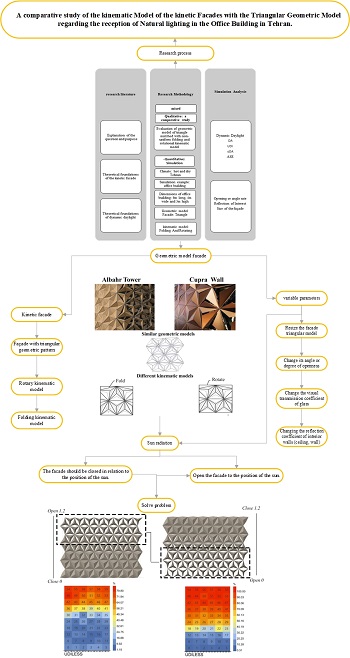
Methods: To assess natural lighting, the quantitative method and simulation tools utilized were Grasshopper and Honeybee Plus plugin version 06, along with Ladybug lbt version 1.5.0. Subsequently, the simulation results were scrutinized employing the comparative study method. Initially, the simulation involves defining the geometry of a room with specific dimensions: a width of 4 meters, a length of 6 meters, and a height of 3 meters, resulting in a total area of 24 square meters, intended for four employees. The simulated model is located in Tehran, with no shading obstacles. The facades will open and close with the position of the sun and the perpendicular vector on the triangular geometric model. The simulation is run for three days of the year: the 21st of March (spring equinox), the 21st of June (summer solstice), and the 21st of December (winter solstice) (due to the similarity of the autumn equinox with the spring equinox, the latter is not considered) and working hour is from 8 a.m. to 4 p.m.
Findings: When comparing the facades, it is observed that the folding kinetic model presents a potential issue of glare and visual discomfort in the space during the months of June, March, and April. This concern is particularly notable at 12 noon in both June and March, coinciding with low light conditions in the space. However, the facade with a rotating kinetic model is only faced with the issue of insufficient light in the space. In order to address these issues, various parameters have been modified. To enhance UDI (Useful Daylight Illuminance) indices with a rotational kinetic model, adjustments were made to ASE (Annual Sunlight Exposure), sDA (Spatial Daylight Autonomy), and UDI indicators with a folding motion model. Variable parameters included alterations in facade size, modifications to the visual transmission coefficient of glass, adjustments to the reflection coefficient of interior walls (ceiling and wall), and changes in the angle or degree of openness for these indicators.
Conclusion: In conclusion, it can be said that a kinetic facade with a triangular geometric pattern and asynchronous motion patterns exhibit different performances in response to natural lighting, considering daylight performance indicators. The facade with a rotating pattern demonstrates a notable impact on the UDI (Useful Daylight Illuminance) daylight indicator, and this effect can be mitigated by adjusting the angle. However, in the kinetic facade, the fluctuation of ASE (Annual Sunlight Exposure) and UDI (Useful Daylight Illuminance) indicators is less influenced. This is attributed not only to the shifting position of the sun in relation to the facade but also to the simultaneous necessity of altering both the extent of the facade opening and the reflection coefficient of the window and glass. The response of both facades, influenced by the variable parameters, places greater emphasis on the degree of facade opening and its correlation with the sun’s position, rather than on the reflection coefficient of the surfaces and the visual transmission coefficient of the glass. Finally, the rotational motion pattern performs better in response to natural lighting.

Educational indicators in Bauhaus school for enhancing the quality of architectural education

Pages 177-197

https://doi.org/10.30475/isau.2023.331671.1883

Fatemeh Almasi, Elham Pourmahabadian

Abstract Extended Abstract Background and Objectives: The architectural education methods should encompass theoretical knowledge, as well as professional and social concepts, by evaluating the indicators of the world’s leading schools of architecture. Architectural schools use appropriate educational techniques and cover various activities involving knowledge, skills, and creativity. Considering the global developments, it seems that acquiring skills to address future challenges necessitates the enhancement of educational approaches and the recognition of influential learning factors. Due to the lack of authors contributing to the formation of architectural theory during the contemporary Iranian architecture era, it is imperative to examine the current state of Iranian architectural schools. This is crucial as they lack a suitable and systematic structure. Bauhaus school is an example of bringing about a revolution in architecture, which has had lasting effects day. Considering that much research has been done in the field of architectural education, but few sources have directly addressed this subject, this research aims to examine the educational process in Bauhaus school and provide solutions to improve the quality of architectural education. The question posed for this research is as follows: What is the process of education in Bauhaus school? And how can it be used to improve the quality of contemporary architectural education? To answer this question, the premise is that it seems that the teaching methods of the Bauhaus school can be fruitful for teaching contemporary architecture.
Methods: In terms of purpose, this research is in the field of applied research and adopts an analytical descriptive methodology. To enhance the quality of architectural education in Iran by applying the educational indicators of Bauhaus school, a systematic approach was employed. Initially, these indicators were derived from theoretical foundations. Subsequently, two questionnaires were developed and distributed among university professors (experts) and master students. The statistical population for architectural experts (professors) and students consisted of 50 and 150 individuals, respectively, chosen through random classification sampling. The overlapping indicators were consolidated based on the corrective opinions of 20 experts. Fifteen educational indicators were formulated as questionnaire questions, utilizing a five-point Likert scale, and descriptive statistics were employed for the analysis of the findings. In conclusion, suggestions were generated for the implementation of Bauhaus educational indicators to enhance the quality of architectural education in Iran, drawing upon the conducted studies and questionnaire results.
Findings: The principles raised in this research indicate that architectural education in Bauhaus school is of good quality. In line with the research objective of utilizing Bauhaus educational indicators to enhance the quality of architecture education in Iran, three components—upbringing, social, and environment—were taken into consideration. The overlapping indicators were then consolidated into 15 categories. Through assessments conducted by both students and experts, aspects such as meditation, preparation for the architecture profession, real-world work experience, practical product production, the interplay between art and industry, the connection between individuals and the university, the integration of art, technology, and life, accessibility, interdisciplinary collaboration, experimental and exploratory learning, and the potential for hands-on experience and construction were closely evaluated. These aspects require special attention in Iranian architecture education. However, other elements did not receive favorable scores, indicating a lack of alignment between the country’s architectural education and the educational indicators of the Bauhaus.
Conclusion: Teaching architecture becomes possible when there exists a complete and acceptable definition of architecture that can be taught. Bauhaus school has provided a comprehensive definition of architectural education that led to the education of an architect. Thus, in addition to being the school of architecture, it has nurtured ideas and art of students and even professors to connect with the professional market and industry. According to the studies conducted, and the indicators extracted along with the results of the questionnaires, it is confirmed that the state of architectural education in Iran has a significant difference from the educational indicators of Bauhaus school. Addressing challenges in contemporary education requires implementing solutions, such as a comprehensive review of architectural educational programs. This can involve evaluating students’ work through peer and professor assessments, integrating technical and design courses similar to Bauhaus school, fostering interactions between students and professors across different academic levels, incorporating opportunities for meditation and breathing exercises, facilitating one-on-one learning experiences with professors, and establishing connections with domestic and international scientific institutions. Additionally, providing real teamwork experiences through participation in both domestic and foreign competitions, transferring professors’ professional experiences by simulating professional environments, assigning projects that result in tangible and practical products aligned with societal needs, embedding suitable workshops, and fostering collaboration with related fields can collectively contribute to overcoming issues in the contemporary education system and advancing the quality of architecture education.

Re-Interpreting the levels of enclosure in the labyrinth of historical houses in Kashan (Ameri house) based on the rhizomatic epistemology of Gilles Deleuze

Pages 199-213

https://doi.org/10.30475/isau.2023.337858.1907

Hosna Varmaghani

Abstract Extended Abstract Background and Objectives: Enclosure serves as a fundamental principle in shaping spatial identities, defining the unique character of a place. In Iranian architecture, mass is not just a physical element but also a concept that molds and encapsulates space, embodying the notion of enclosure. The term “rhizome” is a biological term, as a metaphor, contains concepts such as labyrinth, multiplicity, connection, difference and intermediate position. In this way, the elements that create confinement, as well as the elements of multiple space and rhizomic labyrinth, are identified in the literature review, and then, in order to obtain the different qualities of the classification of the enclosed space in a quasi-rhizomatic structure, the aspects of the relationship between these two categories have been deduced. The purpose of this article is to investigate the methods of achieving a variety of enclosed areas in the spatial organization of Kashan historical houses and to reinterpret the degrees of their enclosure. Key questions include how elements of rhizomatic epistemology can inform the reinterpretation of enclosure levels within Kashan’s historical houses and which physical and spatial approaches have contributed to classifying their enclosure structures.”?
Methods: “The research employed a descriptive, analytical, and logical reasoning approach. Data collection involved both library research and fieldwork, with Depthmap and Agraph software utilized for data analysis. First, the definitions of spatial enclosure in the field of architecture and rhizome theory in the field of philosophy were studied. In this way, the factors of creating enclosure and characteristics of thinking and rhizomic space were extracted. Then, multiple rhizomic spatial indices were categorized in four sections and similar and overlapping indices were placed in one category. These four categories were analyzed through space analysis software (Depthmap-Agraph) in architectural configuration. As the largest historical house of Kashan with many introverted areas, Ameriha House was chosen as a case study and in the way of reinterpreting the enclosure according to the labyrinth structure of this house, compatible components in rhizomatic epistemological foundations have been used , aligning with its unique architectural style.
Findings: In order to analyze and interpret the enclosure based on the aforementioned theory and considering the spatial nature of the rhizomial logic and also the existence of categories such as connection, connection, difference and continuity, the indicators of the space syntax theory were used to analyze the study sample of the historical houses of Kashan. In this order, it is argued that the indicators of space difference, space traffic and isovist, connection and number of space and interlinking in the theory of space syntax in connection with the indicators mentioned in the rhizome theory can be used in the reinterpretation of the degrees of enclosure of the labyrinth structure of the historical houses of Kashan. To be more precise, the sub-categories of space dissimilarity/heterogeneity/difference with the help of space difference index, the sub-categories of spatial diversity/unsimilar continuity with the help of spatial traffic index and isovist, the sub-category of abundance of areas/connections with the help of two syntactic indicators of connection and the number of spaces and the sub-category of the set of coherent links and Multicore can be analyzed and measured with the help of integration index. The simulation of the movement in the spatial arrangement of Ameri House shows that the character of fluidity, continuous changes and new orientations has been expressed by creating frequent thresholds and establishing intermediate and in-between areas. The crucial principle of rhizomatic space lies in its establishment amidst and between elements. The physical manifestation of these characteristics becomes evident through the simulation of movement and vision within the layout of the Ameri House. Also, dissimilarity in the level, shape, number of connections, type of spaces and flexibility of configuration leads to the logic of difference in rhizome theory. The physical/spatial approaches mentioned in the rhizomatic and integrated relationship with each other enrich the levels of enclosure in the spatial structure of the Ameri House in Kashan.
Conclusion: The results of the research show that multiple physical/spatial approaches in accordance with the body of the rhizome space include de-territorialization and re-territorialization, fluidity, flexibility, difference and heterogeneity, multiplicity of spaces and paths and being in the middle and in-between have been effective in creating enclosure as well as diversity and multiple degrees of enclosure. The rhizome approach of multitude and multiplicity of spaces and paths in the three domains of border, threshold and territory has led to the difference and diversity of the extent and manner of spatial enclosure. In such a way that the inside/outside boundaries (entrances), the spaces between the yards (thresholds) and the area, the shape and various openings of the 9 yards (realms) have provided very different states of visual and physical access limits. Spatialization and arenaization of the house in Kashan has formed a set of coherent and multi-core links through reterritorialization and decentralization of arenas. In the sense that many courtyards with different numbers of connections to the peripheral areas of the territories have led to decentralization and formation of multiple cores, and the expansion of these areas in many directions has led to fold logic, divergent and horizontal thinking.

An analysis on promoting the public acceptability of earth architecture in Yazd city

Pages 215-232

https://doi.org/10.30475/isau.2023.400964.2048

Amirreza Sadeghian, Roxana Abdollahi, Ali Akbari, ,Mehrdad Javidinejad

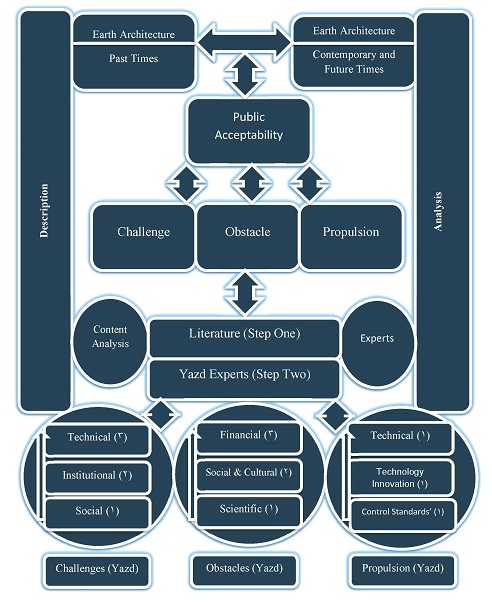
Abstract Extended Abstract Background and Objectives: “Earth architecture” is one of the construction techniques in architecture with a rich history dating back to several thousand years, whose traces are visible in the architecture of different nations of the world, including Iran. Earth architecture is one of the sub-branches of vernacular architecture, which has a rich set of originalities and native-historical capacities in different parts of the world. Due to the extensive availability of soil; it has played a significant role in time and history by reflecting many originalities of vernacular and traditional architecture. Regions like the historical city of Yazd, characterized by desert climates, have historically been ideal environments for the development of earth architecture. Despite its longstanding heritage, contemporary attention to the various capacities and innovations of earth architecture has been lacking, with challenges and sensitivities in the field now garnering increased attention. Based on this, despite the background and existing rich capacities; The trend of widespread use and acceptability of Earth architecture in the contemporary period has been accompanied by a noticeable decline because of the growth of technology in competing industrial materials and cultural changes in construction. Public acceptability is a comprehensive and relevant matter and its application can provide the level of public acceptability. As such, the aim of this research is to identify bottlenecks and strategies to enhance the public acceptability of earth architecture in Yazd. By utilizing the public acceptability index and emphasizing the historical context of the city, the study seeks to promote the revitalization and improvement of earth architecture in the region.
Methods: The historical city of Yazd, with its desert climate, has historically provided an ideal environment for the development of earth architecture. Despite its rich heritage, contemporary attention to the diverse capacities and innovations of earth architecture has been lacking, leading to increased scrutiny of the challenges and sensitivities within the field.
Findings: The research findings reveal that Earth architecture, like other architectural techniques and styles, possesses its own set of advantages, disadvantages, challenges, obstacles, and drivers. Through content analysis of research literature and consultations with local experts, these factors have been identified and categorized. In addition, categorization and prioritization of the challenges, obstacles and drivers of earth architecture in the research literature and experts of Yazd shows the similarities and differences that indicate the “locality” of the public acceptability of earth architecture. From a comparative point of view, regarding the challenges in the scale of world literature, “technical challenges” have been the most important issue. In the same scale and in the obstacles section, “policy-based obstacles” had more points, and in the driver’s section, “technical and architectural drivers” were emphasized more. On the other hand, public acceptance of earth architecture”; “less university programs and courses” and two categories including “innovation and technology” and “standard development and control criteria” are respectively “priority challenges”, “priority obstacles” and “priority drivers” of Yazd city.
Conclusion: The category of public acceptability of earth architecture has a set of interconnected elements that bring together different issues such as advantages and limitations, and the triple bottlenecks of challenges, obstacles, and drivers. Accordingly, recognizing and prioritizing the covering variables for each of these multiple elements in order to improve and promote the public acceptability of this construction method and to promote the public acceptability of earth-based materials is very important in this field. This prioritization serves as a valuable tool for identifying collective actions within specific physical contexts, facilitating the implementation of architectural policies. Moreover, this new policy framework places greater emphasis on public acceptance, thereby fostering increased attention and support for earth architecture in Yazd city. Such a focused approach can effectively promote public acceptance in a practical and targeted manner.

Quantitative analysis of the physical development pattern in Yazd city

Pages 233-246

https://doi.org/10.30475/isau.2023.346590.1932

Mehrab Mehrabi, Mohsen Rafieian

Abstract Extended Abstract Background and Objectives: The dynamic and rapid growth of urbanization and, as a result, the physical changes in cities have led to many challenges and problems. Physical development is manifested in varied forms, ranging from scattered to dense and intelligent. Each form of development has its advantages and disadvantages. Accordingly, without proper planning and consideration of the existing context, unmanaged city growth can cause direct and indirect harm to the urban environment, with citizens and resources being the primary victims and potential future heritage. Iranian cities have also contributed to this global experience based on many variables, such as demographic, social, and economic movements. In the meantime, the historical city of Yazd, as a precious legacy of its predecessors, has experienced a coherent and sustainable form of development by relying on creativity and initiative. The physical structure has been transformed into different types in the last few decades. Continuing this situation not only disrupts the city’s physical cohesion but also exacerbates the economic, social, and legal issues. Therefore, the present research seeks to answer whether the findings of different models in the analysis of the physical development pattern in Yazd City yield a unified result or deviate from one another.
Methods: The current research is an applied research in terms of purpose and adopts a descriptive-analytical approach. The data and information required for analysis in the research have been collected through bibliographic and field studies. Aligned with the research objectives, the study employs quantitative analytical models, namely Shannon entropy, Heldren, Moran’s coefficient, and a comparison of filled and empty urban land. Additionally, multi-time satellite images have been incorporated to analyze the data and investigate the physical development pattern of the city.
Findings: In this research, various quantitative analytical models such as Shannon’s entropy (2006-2021), Heldren’s (1996-2016), Moran’s coefficient (2006-2016), comparison of full and empty urban land (1398) and multi-temporal satellite images in the period 1990-2000-2013 and 2021 have been used to study the physical development pattern of the city. The results of the study of the city’s physical development using multi-temporal satellite images in 1990-2000-2013-2021 indicate a 71.46% growth of the city during these 31 years. Contrasting Shannon’s entropy model between 1385 and 1400 reveals the city’s dispersed growth over the 15-year period. In accordance with Heldron’s model, using 1345 as the starting point and 2016 as the endpoint, it is observed that 59% of the overall physical development or city size increase is attributed to population growth, while the remaining 41% is linked to the scattered development of the city. The findings from the comparison of Moran’s coefficient in 2006 and 2016 indicate a shift in the spatial distribution pattern of Yazd city’s population density, transitioning from a random pattern to a scattered one. Additionally, when evaluating the ratio of dense tissue area to the total city size in Yazd (coefficient 0.015), the comparison reveals that the growth rate of the city area corresponds proportionally to the growth rate of the population during the specified period.
Conclusion: The results of all these methods indicate that the city of Yazd experiences scattered and unbalanced physical development. According to the results of the study, Yazd City is located in an area where the town’s per capita services and facilities are high, with a large volume of services that can serve twice its population. Examining the results, it becomes evident that in Yazd City, the speed of inactive urban levels increases in favor of the active groups as one moves from the central area to the surrounding regions. These functional levels not only exhibit significant potential for internal development but also present a viable option to prevent the sprawling expansion of the city.

Evaluation of privacy criteria in the functional diagram structure of student residences; Case study: Student residences in Qazvin

Pages 247-266

https://doi.org/10.30475/isau.2023.304509.1780

Sara Shariati, Mehdi Khakzand, Mahsa Mirsalami

Abstract Extended Abstract
Background and Objectives: The functional layout of student residences holds significant importance as these spaces serve as a collective ‘second home’ for their residents. Many students living in such complexes have left their hometowns and are adapting to a new city, often encountering individuals from diverse backgrounds and varying social behaviors. This adjustment period, especially in the initial months, highlights the crucial need for ensuring residents’ privacy within their living environment. This study aims to evaluate the relationship between the functional layout of these residential spaces and their ability to safeguard residents’ privacy. By focusing on specific criteria tailored to meet the privacy needs of student residence occupants, this research seeks to address the challenges posed by the transition to communal living in a new environment. To understand the role of spatial organization in student residences, this study focuses on the spatial thresholds that define boundaries between interior and exterior spaces, emphasizing the creation of solitude and personal territories. The category of solitude and the creation of privacy and personal territories have been addressed in order to able to determine the desired solitude for the residents through the evaluation of the effective components of threshold that are resulted from the spatial organization of such residences. Drawing upon David Canter’s theory of place, the study examines the physical-environmental, functional-activity, and perceptual-semantic components of student residences. Specifically, it evaluates two residential complexes—the Imam Khomeini International University and the Islamic Azad University of Qazvin—to analyze their centralized and linear structural configurations. In addition, the study incorporates theories of environmental perception, such as Gibson’s ecological model of perception and the theory of environmental affordance, which emphasize the role of movement in acquiring environmental information. It also considers Barker’s ecological theory, which suggests that changes in behavior result from changes in the environment. These theories inform the extraction of research indicators and variables in the theoretical model, providing a framework for understanding the relationship between spatial organization and resident behavior.
Methods: The research questionnaire consists of two main sections. The first part assesses the quality of spatial organization in student residences regarding privacy, focusing on independent research variables. The second part gathers social data related to the dependent variable of privacy, covering two components: environmental affordance and attachment to the environment. Both questionnaires utilize a 5-point Likert scale to categorize residents’ responses regarding privacy in student residences. To evaluate the theoretical models and determine the relationship between independent and dependent variables, a multivariate method of structural equation modeling was employed. This approach, facilitated by AMOS22 software, combines factor analysis and path analysis. Through logical reasoning, survey data and structural equations are analyzed to draw conclusions.
Findings: The analysis reveals that physical-environmental characteristics apply the strongest influence on spatial organization, with a factor loading of 0.83. Following closely, functional-activity characteristics rank second with a factor loading of 0.7, while perceptual-semantic characteristics rank third with a factor loading of 0.56. In terms of evaluating privacy criteria based on the dependent variable questionnaire, environmental affordance demonstrates a higher impact with a factor loading of 0.71 compared to environmental attachment, which has a factor loading of 0.66. Furthermore, the significant correlation between privacy and spatial organization is evidenced by a factor loading of 0.62, indicating that spatial organization plays a pivotal role in shaping privacy, with internal components interacting synergistically.
Conclusion: The results highlight the significance of inner courtyards as an in-between space, particularly in student residences, as they enhance productivity and spatial dynamics. Unlike linear designs, incorporating courtyards into residence spatial organization increases spatial thresholds, facilitating spatial selection and permeability. Additionally, the hierarchical arrangement of spaces within courtyards fosters privacy and territorial definition among residents. Overall, survey results underscore the importance of creating conducive atmospheres in student residences through a balanced integration of physical-spatial and perceptual-behavioral factors. These factors not only influence the desirability of residences but also contribute to resident satisfaction and the establishment of stable behavioral patterns.

Determining the factors affecting the enhancement of “place identity” in housing; Study case: Residential fabrics of Ardabil

Pages 267-284

https://doi.org/10.30475/isau.2023.302006.1767

Maryam Hassani Gharehtapeh, Jamaloddin Mahdinejad, Bahram Saleh Sedghpour

Abstract Extended Abstract Background and Objectives: Place identity is the symbolic-emotional aspect of belonging to a place, often associated with positive emotions. It reflects an individual’s emotional attachment to a place where they perceive it as integral to their identity. Studies related to place identity include different scales of human habitation from house to neighborhood and city. Among these, living in a house holds significant influence over human identity. The emotional connection fostered by the house can shape an individual’s sense of place identity. Since the provision of human ideals in various fields arouses positive emotions, paying attention to the ideals of place can also be considered as the basis for creating an emotional attachment. As the house represents a significant place, its essential components can be analyzed to understand the factors influencing place identity. Thus, this study aims to identify and explore the components that contribute to place identity within the context of the house. By viewing the house space as a “place” and recognizing the importance of emotional attachment, the research seeks to explain how each component influences an individual’s sense of place identity.
Methods: In this study, in order to investigate the effective components of place identity, based on the basic concepts and by reviewing the literature, a theoretical model has been developed and analyzed during various stages. So, in the first step, a measurement scale was developed to measure the hypothetical model, and its validity and reliability were evaluated using data from a cross-sectional survey, alongside confirmatory factor analysis. The participants of the research are residents of different residential of Ardabil urban fabric, including old fabrics (historical areas), newly built settlements and peripheral regions. Subsequently, the relationships proposed in the hypothetical model were examined through structural factor analysis to assess the model’s fit. In the final stage of the experimental process, the final structural model was formulated by eliminating non-significant relationships. The model’s fit indices were then evaluated, and the factors influencing place identity, along with their mode of influence, were determined based on the finalized model”.
Findings: In the final structural model, all relationships were found to be significant, with the chi-square ratio (78.011) to its degree of freedom (45) equating to 1.734. Additionally, the fit indices indicated a good fit for the model, with RMSEA at 0.050, GFI at 0.959, AGFI at 0.959, CFI at 0.982, NFI at 0.958, TLI at 0.973, and SRMR at 0.0489. These results collectively suggest the model’s suitability. Furthermore, the model explained 24% of the variance in place identity, with significant proportions of variance explained for various aspects of house conformity with ideals, including beauty (46%), facilities (41%), social status (39%), family relationships (38%), beliefs and values (29%), and spaciousness (12%). Also, according to the findings, “compliance with ideals in terms of family relationships” and “compliance with ideals in terms of social status” have direct and positive effects on the level of “place identity” respectively. The biggest indirect effect on the level of “place identity” are caused by the “compliance with ideals in terms of facilities”, and the “conformity to ideals in terms of Spaciousness” respectively. Also, the greatest effect on the level of “place identity” was attributed to the “compliance with ideals in terms of family relationships”, which was significantly influenced by the “compliance with ideals in terms of facilities” and through that, by “compliance with ideals in terms of spaciousness.
Conclusion: In conclusion, the analysis suggests that alignment between residents’ ideals and various aspects of the house’s physical structure, activities, and concepts (substantive components of the house) significantly impacts their place identity. Achieving satisfactory family relationships and favorable social status emerged as particularly influential factors. Improving these factors requires meeting residents’ ideals in terms of facilities, thereby enhancing functional satisfaction, which, in turn, is dependent on the house’s conformity with ideals regarding spaciousness”.

A Patterns of housing and neighborhood selection among special groups; A review of housing selection models in Tehran city

Pages 285-299

https://doi.org/10.30475/isau.2023.327472.1864

Reza Asadi, Atoosa Modiri, Farhad Hosseinali, Ali Akbar Gholizadeh

Abstract Extended Abstract Background and Objectives: With changing living conditions, households develop diverse needs, prompting moves within the city that involve changes in residential units and the socio-economic environment of surrounding residents. In this paper, the identification of housing pattern selection and the differentiation of households’ preferences are explained based on the life course theory, which describes the general cycle of life changes and housing needs for all households. In the development of the mentioned theory, every urban household is divided into distinct categories with socio-economic characteristics, and these distinctions are the source of various housing choices. Identifying the effects and relationship between the socio-economic characteristics of households and the characteristics of neighbors explains the main discourses and currents of the city; such as the homogeneity of localities and spatial separation. In this paper, the choice of housing for certain groups in Tehran is discussed, emphasizing the socio-economic context of their chosen neighborhood. Therefore, the target household groups of the research are immigrants to Tehran, those born outside of Tehran, simple workers, single-parent households, individuals with disabilities and renters.
Methods: Housing choice modeling employs discrete choice methodology and utilizes “quantitative multivariate regression” techniques, allowing for the analysis of multiple dependent variables. The model’s input data is sourced from the 2013 general population and housing census of Tehran city, as well as urban facility data from the detailed plan. The variables pertaining to the residential unit group include infrastructure size and building sustainability. Socio-economic structure variables encompass the female literacy rate, female employment rate, higher education attendance rate, private vehicles per capita, and student attendance rate.
Findings: The research findings indicate that variables related to the “residential unit” group apply the most significant influence on housing choice. Additionally, all socio-economic variables demonstrate a significant relationship, validating the model’s accuracy. Notably, “personal car per capita” and “women’s literacy rate” contribute the highest percentage of explanation within this group. Among certain groups, there is a higher likelihood of selecting residential units with limited infrastructure and unstable buildings within the “residential unit” group. Similarly, the probability of choosing neighborhoods with lower socio-economic contexts increases. An exception to this trend is observed among immigrants who arrived within the last five years. Overall, the research suggests that, for certain groups, the priority lies in selecting a suitable residential unit over the neighborhood. However, for immigrants who have lived in the area for the past five years, prioritizing the socio-economic context of the neighborhood becomes more prevalent.
Conclusion: The research findings highlight that, within the housing selection model, the characteristics of the residential unit show a significantly greater influence compared to the socio-economic context of the neighborhood. This prioritization of housing unit characteristics over other housing attributes aligns with observations made in third-world countries (Coulomb, 1998; Jacob & Saved off, 1999; Koizumi & Asadi et al., 2021). Reasons cited include the lack of premeditated planning for urban development, ineffective zoning regulations, and challenges within city neighborhoods. Furthermore, the pattern of residential unit selection remains consistent across the research groups, with an increased likelihood of choosing units with limited infrastructure and greater building instability. It appears that, for all groups, selecting appropriate housing takes precedence over choosing an ideal living environment. Within the socio-economic context of neighborhoods, car ownership and the literacy rate of women emerge as significant indicators of socio-economic differentiation in urban environments. Car ownership serves as a tangible marker of household wealth and is closely aligned with the city’s wealth distribution pattern, making it the primary index for defining the residential environment. Following closely, the literacy rate among women emerges as the second most influential indicator, impacting all target groups studied in this research. This underscores the importance of women’s education and their role within household structures in shaping Tehran’s socio-economic landscape, ultimately influencing household decisions in selecting a neighborhood. In analyzing the selection pattern of the socio-economic environment for residence, it was observed that nearly all independent variables and household characteristics align. Notably, as the quality of socio-economic neighborhood characteristics decreases, the likelihood of selection by research groups increases. However, an exception is noted among recent immigrants within the last five years, suggesting a divergence in the pattern of selecting the socio-economic environment among households-an important finding of this study.

A predictive model for analyzing users’ perception of the cities based on the Twitter; Case studies: Iran metropolitans

Pages 301-317

https://doi.org/10.30475/isau.2023.337531.1905

Maryam Mohammadi

Abstract Extended Abstract Background and Objectives: The examination of users’ emotions through social media has developed into an impactful domain across diverse scientific fields, appealing not only to business proprietors and politicians but also to general users. In the meantime, this field has infiltrated urban studies and has been used by urban planners and designers due to its methodology; whether in the form of research that aims solely at emotion analysis or as an integrated layer within broader research endeavors. The aim of this article is to explain this field in the analysis of urban emotions as modeling methods in order to identify the position of this field in urban studies by examining the importance of emotion and the methods of its study in the city.
Methods: This research used the supervised machine learning approach and analyzed the sentiments of tweets related to eight major cities in Iran. The data collection consists of 930 tweets that were collected in a period of 10 years from 2011 to 2022. Initially, over 5000 tweets were collected, and during the tagging process, 80% of them were excluded due to their limited relevance to the city, emphasizing tweets related to urban space. The name of cities and tourist areas were searched to establish a balance between positive and negative data. The tweets are downloaded through Twitter streaming API and the metadata along with the text, including the number of retweets, number of likes and tweet ID, language and location. The data sets have been used for machine training after standard and normalization steps. In this research, the ratio of training data to testing data is 80 to 20. According to the supervised approach, the data were labeled by the researcher with three negative, neutral, and positive labels, and where the researcher had doubts, the opinions of two other experts were used. In general, both machine learning and deep learning have been used. In order to check the validity of the model and to test it, the confusion matrix has been used.
Findings: Firstly, the machine was trained based on 3 algorithms that were used in many research related to text sentiment analysis. Based on the test results presented on the confusion matrix, the accuracy of the trained machine in determining the polarity of the text in three polarities was defined. Among the three used algorithms, support vector machine and random forest have performed better than other algorithms. Given that the model’s highest accuracy was approximately 70%, deep learning was employed to train the machine in order to assess the potential for achieving improved results. In the following, machine learning with a convolutional neural network algorithm and a hybrid algorithm were considered. At first, the machine was trained using a convolutional neural network. The results of the accuracy of the model showed that the model is predictable by up to 75%. Next, an attempt was made to improve the predictive accuracy of the model by writing a hybrid algorithm based on the convolutional neural network. The architecture of this network is such that two types of data are considered as input to the neural network, text data and other features in the data set, including location, number of retweets, number of likes, city codes and searched content (as metadata). Therefore, based on this input and output (classification based on the polarity of the text by the researcher), the machine was trained and finally tested. As depicted in the structure of the hybrid algorithm, the significance of the text is assigned a weight of 90%, while the importance of metadata is weighted 10%. It should be noted that different percentages were given to the importance of each of the inputs and the predictability accuracy of the model was checked. As the model test results show, the designed algorithm has improved the predictability of the machine by 4%.
Conclusion: In this article, sentiment analysis based on model-oriented methods - machine learning and deep learning - was scrutinized, and therefore, while comparing it with traditional methods and lexical methods, the process of urban sentiment analysis was developed and the different levels of the process were described in detail. As stated, these methods have many advantages and can be useful for analyzing the current situation or predicting different urban projects. Besides, compared to traditional methods, they are less expensive, faster and have sufficient accuracy. According to the appropriate capability of the trained machine, this machine can predict the polarity of the data. This means that by using the text data published in social networks, it is possible to analyze the feelings of users. Certainly, when these data are geodatabases, there is also the capability to geolocate emotions. This approach allows for a swift, accurate, and cost-effective general assessment of city spaces. By identifying areas where users perceive negative emotions, the reasons can be investigated and addressed accordingly. This research has been innovative in two aspects, 1) preparing a collection of data related to the sentiment of Persian language users related to the city and 2) analyzing urban sentiment in the country using machine learning in the field of urban planning and design. Some limitations of this research include limited access to all data published on Twitter using Twitter streaming API; the small amount of available and relevant data; low use of Twitter by users due to filtering; and the unavailability of financial resources to prepare and use a larger set of data.

Reading the stimuli affecting the future status of urban development of competitive knowledge-based (Innovation districts) in Tehran metropolitan

Pages 319-344

https://doi.org/10.30475/isau.2024.305667.1786

Elnaz Behzadpour, Mohammadreza Farzad Behtash, Zahra Sadat Saeideh Zarabadi

Abstract Extended Abstract
Background and Objectives: Today, “knowledge” has become a vital necessity for increasing the competitiveness of countries and cities in the twenty-first century. Therefore, a knowledge-based economy, defined as an economy capable of generating, disseminating, and utilizing knowledge, has led to a shift from traditional patterns of urban development to knowledge-based development, ultimately resulting in a knowledge-based city. On the other hand, it is now established that a city relies more on its capacities for innovation than on material resources and central government support. Innovation, resulting from the dissemination of local knowledge through interactions among urban elements such as businesses, customers, suppliers, and universities, is what drives growth, economic development, sustainability, and urban competitiveness. However, unfortunately, the main pillars or areas of innovation, which are the connecting points between the concepts of knowledge-based urban development and urban competitiveness, have not been identified in the global literature. In this regard, Tehran, as a megacity, due to the emergence of a networked society and the phenomenon of a knowledge-based economy, has set a new perspective called “knowledge-based urban development” and a competitive city on the agenda of its planning and urban development. However, there is currently no written plan for moving towards a competitive knowledge-based city in Tehran, and there is a need for review and revision. In line with the aforementioned, the main issue of the research is the neglect and insufficient attention to the main driving force such as innovation as a value-creating capital for achieving competitive knowledge-based urban development in Tehran. Therefore, the main objective of this research is to address this gap in the global literature in locating competitive knowledge-based urban development (innovative regions) in the megacity of Tehran.
Methods: The aforementioned research has an applied development objective, gathering data through documentary studies and expert interviews in a Delphi format involving 20 experts. A total of 54 influential factors affecting the future state of competitive knowledge-based urban development in Tehran, within 13 components (diversity, urban scale and population density, spatial proximity, internal spatial connectivity, external spatial connectivity, knowledge dissemination to society, government support, ICT application, innovative society, economic competitiveness, organizational-institutional competitiveness, locational character, and human capital), and 6 dimensions (institutional-organizational, economic, physical, socio-cultural, activity-performance, and technology-communication) were identified and then prioritized based on expert opinions using questionnaire tools and the Delphi technique. Furthermore, the method of Structural Mutual Effects Analysis was applied using the MICMAC software for further processing.
Findings: The research findings indicate that 13 stimuli have been identified as the most influential factors on the future status of competitive knowledge-based urban development in Tehran. Among them, six main influential factors (decision-making culture based on knowledge, collaboration of knowledge actors and decision-makers in knowledge sharing, organizational interaction, supportive legal framework for knowledge-based activities, government investment in knowledge-based activities, strategic collaboration and organizational networking) fall under the institutional-organizational dimension, while five stimuli (knowledge-based businesses, the infrastructure of knowledge spaces, global urban competitiveness index, foreign direct investment, per capita gross domestic product of the city, international business environment, and urban innovation) belong to the economic dimension. Additionally, one stimulus related to the Gini coefficient of the urban region is categorized under the social-cultural dimension. This highlights the significant role of governments and organizations, as well as the economic planning approach and the importance of intellectual advocacy in achieving a competitive knowledge-based urban development future in Tehran.
Conclusion: The research findings confirm the theory based on governance and economy in the development of competitive knowledge-based cities in Tehran. Contrary to what Florida suggests, it’s not only the creative class and soft factors that determine the development of competitive knowledge-based cities in Tehran, but rather a combination of governance-based theories and soft and economic condition theories that lay the foundation for the development of competitive knowledge-based cities. Therefore, priority should be given to these key drivers in formulating the main strategy for the future development of competitive knowledge-based urbanism in Tehran through the establishment of overarching documents and the content of urban planning schemes. Furthermore, the following points are summarized in the form of recommendations: Encouraging the clustering and concentration of innovative businesses and individuals to promote innovative activities and economic competition. In terms of government support, the establishment of official institutions to guide knowledge-based urban development, facilitating government-industry-academia collaboration, and investment in cutting-edge technologies are recommended. Additionally, governments are advised to act as entrepreneurs and market creators by deeply understanding and supporting knowledge-based businesses. In the societal sector, integrating traditional and new technological infrastructures, changing citizens’ lifestyles in line with sustainable development approaches, and altering social behaviors have been emphasized. Regarding diversity, diverse and context-appropriate spatial policies, the establishment of cultural hubs and districts, and infrastructure development to promote diversity and encourage the presence of various innovative industries have been proposed. In terms of external connectivity, upgrading public transportation systems and creating physical links between public spaces to facilitate access to technology and innovation clusters are among the suggestions. Finally, the development of organizations and knowledge-based individuals and the aggregation of knowledge actors are also proposed as strategies to enhance local knowledge and information.

The development of in-between spaces in houses during Qajar and Pahlavi I period based on changes of value

Pages 345-365

https://doi.org/10.30475/isau.2023.324828.1851

Paria Aliakbari, Shadi Azizi, Mozaien Dehbashi Sharif

Abstract Extended Abstract Background and Objectives: Every culture provides human patterns in various time periods which determine activities, achievements and social responsibilities of people. These cultural patterns and values influence individuals’ lifestyles and guide their actions. Consequently, the formed values of traditional societies undergo transformation as global social changes and revolutions redefine societal norms. In this process, the values with which people lived their lives for years and then formed their physical environment are replaced with some new values and patterns. Therefore, it can be said that space matters in understanding the changes and social developments that have taken place in the society in the space-time dimension. In order to see the changes that have taken place in the society, one must pay attention to its physical appearance in order to understand the root of the transformation in the structures of the society. Architecture and the city can be considered as elements that are affected by the societal conditions, effectively illustrating and manifesting societal changes. One of the most important causes of spatial changes are the social changes. According to social psychologists and sociologists, social changes influence societies in both materialistic and non-materialistic aspects. This study aims to explore non-materialistic aspects, particularly changes of value, and their materialistic effects on spaces, focusing specifically on in-between spaces.
Methods: The methodology used in this study is qualitative in nature, with an exploratory-historical and post-analytical logic. The exploratory-historical logic explores historical contexts to understand societal mechanisms and approaches. Meanwhile, the post-analytical logic examines current societal mechanisms and approaches and constructs hypothetical models to explore underlying relationships. Data collection for this study involved gathering information from various sources, including bibliographic research, as well as primary and secondary resources such as images and documents.
Findings: Values of a society reveal the culture and beliefs of a nation which can directly impact the form and structure of its built environment. As a result, in-between spaces, as semi-public and semi-private spaces, carry several roles which are being affected by the values of their time. These values were transformed in Qajar period when the signs of modernity appeared in architecture. The findings highlight the emergence of new societal values, including socialization of women in society, rejection of polygamy among men, shrinking families (nuclear structure), separation between home and workplace, outburst of western goods (new appliances of life, formation of new entertainment out of home, emergence of service jobs, individualism and independent lifestyles). The aforementioned factors have changed in-between spaces through some structural changes, so they formed new values and have changed the notions of in-between spaces, such as privacy, private area and personal spaces. Consequently, new forms of in-between spaces, such as balconies, pause areas, and horizontal divisions like stairways, have emerged to accommodate these evolving societal values.
Conclusion: The reciprocal relationship between space and social changes is evident in the two studied periods. During the Qajar and Pahlavi I period, the construction of new spaces and buildings that were not seen before in Iranian society, led to significant physical changes that mirrored evolving societal values. On the other hand, cultural connections with the West, educational trips, travel and printing of books and newspapers and other factors led to major changes in individual and social values. Consequently, the spaces within households, including crucial communication and intermediary areas, underwent transformations to accommodate the evolving needs of individuals, which differed noticeably from those of previous generations.

Investigating the position of housing brand from the perspective of residents using perceptual mapping technique Complex of long apartments with houses and short apartments in Ardabil

Pages 367-383

https://doi.org/10.30475/isau.2023.317109.1829

Samira Saeidi Zaranji, Mohammad Hassan Yazdani

Abstract Extended Abstract
Background and Objectives: As urban populations increase and cities tackle with environmental crises and instabilities, achieving sustainable urban development hinges on understanding and promoting a sustainable physical city layout. The concept of the compact city has drawn significant attention and support. However, in our country, traditional patterns embedded in comprehensive urban plans, along with influences from current urban management, have led to the horizontal expansion of cities, resulting in a scattered urban pattern. Addressing the numerous challenges cities face may necessitate transitioning towards denser urban environments. The “positioning” process plays a crucial role for companies, enabling them to select a strategic market position and enhance their brand’s success.
Methods: The current study adopts an applied approach in terms of its purpose and utilizes a descriptive-analytical method. Regarding the study’s nature, data was collected by means of survey method using a questionnaire. To ensure the questionnaire’s validity, it underwent scrutiny by professors and experts, due to the absence of prior research in this area. Additionally, Cronbach’s alpha coefficient was employed to assess questionnaire reliability, yielding a Cronbach’s alpha coefficient of 0.723 for high-rise apartments and 0.782 for houses, indicating high reliability of the questionnaire. The study’s statistical population comprises residents of high-rise towers in Ardabil (District 2) who have previously resided in houses or apartments, as well as house residents who have previously lived in high-rise towers. Snowball sampling was employed to determine the sample size. The research questionnaires consist of two parts: the first part pertains to personal characteristics such as age, marital status, gender, income, occupation, and education, while the second part focuses on research variables, including brand image and loyalty, cultural and social factors, security, economic aspects, infrastructure facilities, open spaces, spatial identity, physical characteristics, lighting and ventilation, management and maintenance, landscape, and transportation access for high-rise buildings and houses. Data analysis was conducted using SPSS software, employing one-sample t-statistical methods and a Pearson correlation coefficient. Perceptual mapping was employed to depict the brand positioning of high-rise complexes and low-rise apartments from residents’ perspectives, aiming to address the research question.
Findings: According to the findings, houses and low-rise apartments are positioned favorably in terms of image and housing brand compared to high-rise towers, as indicated by perceptual maps. However, satisfaction with high-rise towers is ideal in comparison to houses and low-rise apartments on perceptual maps. The one-sample t-test results indicate that the significance level for most variables is below 0.05, leading to the confirmation of the alternative hypothesis (H1) at a confidence level of 95%. This confirms a significant relationship between the average rank of residents’ perspectives and housing pattern dimensions. Consequently, an obvious difference exists between residents’ perceptions of brand positioning for houses and low-rise apartments against high-rise residential towers, with the former showing better image and brand loyalty. Additionally, Pearson correlation tests reveal a positive and significant correlation between image and brand loyalty variables, as well as housing satisfaction with individual characteristics such as marital status, income, occupation, age, and education. However, no significant negative correlation was found between image and loyalty with regards to gender. The results indicate a significant relationship between image variables, brand loyalty, and satisfaction with individual characteristics at a 95% confidence level, with significance levels of 000, 0.001, 000, 0.001, 0.003, and 0.001 for gender, marriage, income, job, age and education respectively, and with respective correlation coefficients of 0.46, 0.605, 0.337 0.250, 0.652 0.561.
Conclusion: Peripheral and horizontal urban development not only leads to the reduction of agricultural lands surrounding cities but also gives rise to various other significant issues. These include rising costs associated with urban infrastructure creation and maintenance, intensifying congestion and traffic, and increasing the length and frequency of commutes. In response to the negative effects of urban over-expansion, which have economic, social, and environmental consequences, new approaches to urban development planning have emerged since the 1990s. These methods, inspired by the principles of sustainable urban development introduced in the 1970s, advocate for mixed land use development, prioritization of public transportation-centered development, and intra-city sustainable development initiatives, saving widespread support. Recent census data from 1976 to 2006 indicates that Ardabil city has experienced horizontal expansion over the years, resulting in the loss of agricultural lands and inadequate services in suburban areas. This underscores issues of spatial injustice and suboptimal land use distribution in certain areas. The research suggests that by promoting the branding of high-rise residential towers and apartments, cities can curb horizontal expansion and promote vertical development. Interestingly, residents perceive houses more favorably than high-rise residential towers. Utilizing effective advertising campaigns can potentially alter citizens’ perceptions of tall buildings, facilitating urban development while minimizing the need for further horizontal expansion.

Explaining the relationship between land use mixing and urban stress; Case study: Zone 8, Municipal District 1, Tehran

Pages 385-397

https://doi.org/10.30475/isau.2024.367384.2001

Khatereh Moghani Rahimi, Mostafa Behzadfar, Samaneh Jalilisadrabad

Abstract Extended Abstract
Background and Objectives: Urbanization is growing rapidly in this world (Evans et al., 2020a, 1). In 2007, half of the world’s population lived in cities (Chinomnso, 2014, 4). This ratio will reach 70% in 2050 (Adli & Schondorf, 2020, 2). Cities are exposed to many issues and problems due to the many advantages they have (Mahmoudzadeh and Harishchian, 2017, 60). For example, urban life affects mental health (Kyriakou & Resch, 2019, 1) and exposure to stress is the most important factor in increasing mental disorders in cities (Streit et al., 2014, 352). In fact, the stress of modern urban life or urban stress can be a basis for mental disorders (Kennedy & Adolphs, 2011, 452). Urban stress is one of the important causes of physical and mental diseases, moral anomalies, reduction of security and waste of human capital in cities. For this reason, it is necessary for urban planners and designers to pay special attention to this issue in their plans and projects. The location of land uses also has a great impact on the quality of life and the efficiency of related services, and one of the basic tasks of urban planners is to allocate land to different uses (Javadi et al., 2013, 23, 24). Today, with the expansion of new urbanism, smart growth and sustainable development approaches, the application of land use mixing as one of the important principles of these approaches in urban planning in advanced countries has increased (Pourmohammadi et al., 2014, 34) and land use mixing has become one of the important cases in the model Spatial planning has become. which includes many benefits such as reducing intra-city trips and reducing dependence on cars, increasing productivity in land use, strengthening the efficiency of land use and increasing social relations of citizens (Javadi et al., 2013, 25). Also, mixing of uses reduces the cost of providing infrastructure in the city (Zarafshan et al., 2019, 175) and improves the sense of belonging of citizens (Kotharkar & Bahadure, 2012, 1). But even though in recent years, many studies have separately dealt with urban stress and mixed use, no study has been done to explain the relationship between the two. For this purpose, this research has been conducted with the aim of explaining the relationship between urban stress and land use mix in district 8 of district 1 of Tehran municipality, which is the most stressful district of this district based on the conditions of Tehran city and the opinion of experts. Considering the importance of the subject, this research has been done with the aim of measuring the amount of mixed use and urban stress in the studied sample and explaining the relationship between these two subjects.
Methods: The research method in this research is descriptive-analytical and based on the purpose of applied research. Quantitative and qualitative methods were used to collect data and regression analysis method was used to analyze them. First, in order to select the sample to be studied, Delphi method was used and by summarizing the opinions of a group of experts in district 8 of one district of Tehran municipality, it was selected as the sample to be studied. For the overall analysis of the research, 37 urban stress indicators have been identified, of which information on 15 cases has been collected through questionnaires and surveys from area residents, and others through quantitative methods such as field sampling, spatial analysis, and library studies. Also, the information related to the mix of uses has been obtained through the entropy coefficient method. According to the population of the area in the last census (59,429) and Cochran’s formula (with a confidence level of 95%, an error of 0.05% and a normal variable rate of 1.96), the minimum number of questionnaires was 381, and finally 413 questionnaires that provided information about It questions 20 measures, distributed in blocks as a simple random sampling. Cronbach’s alpha coefficient was used to measure the reliability of the questionnaire, which was calculated as 0.73. Finally, in order to measure the relationship between mixed use and urban stress reported by citizens, regression analysis has been done. In fact, the analysis used in this article is a simple linear regression analysis. In this analysis, the degree of dependence and the direction of the influence of the independent variable on the dependent variable are examined.
Findings: The findings of the research indicate that the value of the correlation coefficient between the independent and dependent variable is 0.738, which shows that there is a high correlation between mixed use and urban stress. Also, the adjusted or modified coefficient of determination shows that 54% of the total changes in the stressfulness of people’s living environment are related to the mix of uses of their living areas, and the remaining 46% of the changes are related to other variables. In other words, the mix of uses predicts 54% of the variance of the dependent variable. These two variables have an inverse relationship with each other, and the greater the mix of uses in a block, the less urban stress. In fact, it can be said that the user mix index is able to predict changes in citizens’ stress.
Conclusion: As a result, by improving the mix of uses in urban blocks, urban stress can be significantly reduced and the mental health of citizens can be improved. In order to improve the mix of users, effective solutions can be used such as: 24-hour users, or the placement of compatible users in floors, etc. Also, conducting this study in other study samples can be very effective. Considering that the measurement of mixed use and stress in this study was investigated in one area, it seems that conducting this study in other areas or at the city level will clarify the hidden aspects of the relationship between these two variables.

Comparative comparison of “Criticism and Correction session structure in the research studio of Shahid Beheshti University” and the “Proposed structure of active researchers in this field”

Pages 399-418

https://doi.org/10.30475/isau.2023.325431.1853

Nasrin Saljoughi, Vahid Ahmadi

Abstract Extended Abstract Background and Objectives: Criticism and correction sessions form the basis of evaluating architectural design projects. A valid and targeted assessment, in addition to measuring fundamental knowledge, also measures its practical application in practice. Integrating knowledge and skills stands as a primary objective within architectural studios. Therefore, evaluation plays a very important role in the process of architectural education that shapes the professionals in the future. The most important issue is to achieve different methods of criticism according to different conditions. Additionally, evaluation should extend beyond merely appraising final projects, encompassing the critique process throughout an educational period (such as an academic semester) for formative assessment. The application of the successful experiences of foreign researchers in the workshop critique process and its comparative comparison with the workshop critique process in Iran can determine our position in this field. The aforementioned comparative comparison has generally identified the similarities and differences of successful international experiences compared to domestic experiences, and by examining and discovering the reason for the existence of these similarities and differences, it is possible to (1) solve the problem, which is to identify the degree of conformity of the structure of criticism and correction sessions. Through this comparative analysis, two key objectives are addressed: aligning the structure of critique sessions with active research findings and identifying optimal criticism methods within educational contexts. Ultimately, this process leads to localization and enhancement of architectural education practices. In this study, Shahid Beheshti University views the architectural studio as a research workshop, adopting a novel approach to architectural education. Guided by fundamental principles outlined by faculty, this workshop aims to enhance the quality of architecture education, positioning itself as a successful domestic model compared to international counterparts. The primary objective of this paper is to evaluate the alignment of Shahid Beheshti University research studio critique and correction session structure with the recommendations of leading researchers in the field. Specifically, the authors seek to answer the question: to what extent does the structure of critique and correction sessions at Shahid Beheshti University research studio adhere to the standards proposed by active researchers? It is hypothesized that the level of conformity to these standards is within the average range, although empirical evidence will be necessary to confirm this assertion.
Methods: In this comparative study, researchers employed a hypothesis testing approach using a comparative strategy. The study utilized data from two sources: (a) the opinions of leading researchers in architectural education, particularly concerning the structure of criticism and correction sessions, and (b) the innovative approach of Shahid Beheshti University research studio. Ten key concepts, defining the theoretical framework of criticism and correction sessions in architectural studios, were identified through a systematic review of relevant literature from both communities. These concepts, derived from a scientific process, also align with historical perspectives on the subject. The research method employed in this study is a documentary-survey approach utilizing content analysis techniques. The process begins with the selection of keywords and concepts. In the initial step, information is gathered by extracting data from two sources: (1) scientific research articles authored by selected researchers on the broader topic of ‘criticism and correction sessions in architectural studios,’ and (2) published articles specifically related to this topic, focusing on Shahid Beheshti University. The second step involves qualitative and quantitative text analysis, including categorization and extraction of information from the selected sources. This analysis determines the frequency of topics within the categories based on textual elements. Subsequently, in the third step, the results from the second step are interpreted. Statistical analysis of quantitative data was conducted using SPSS software.
Findings: The rThe research findings indicate the identification of ten main concepts or criteria in the structure of critique and correction sessions in the research studio of Shahid Beheshti University. These concepts are: constructive studio environment, participation-oriented approach, involvement of professors and professional activists in studio sessions, criterion-based teaching and assessment method, simultaneous presence of several professors in a single studio for training and evaluation purposes, receiving critical opinions from different professors, integration of different student groups (peer and non-peer) in studio sessions, application of educational technologies in the studio, teacher-centered/ student-centered approach, assessment of judgment and final decisions.
Conclusion: The results reveal a direct and statistically significant relationship between the structure of critique and correction sessions in Shahid Beheshti University research studio and the proposed structure by active researchers in this field, as indicated by the ten identified concepts. This suggests that the critique and correction sessions within the university research studio adhere to a systematic and convergent framework similar to successful global models. Consequently, it is recommended as an exemplary model with the potential for broader applicability. While the research hypothesis initially suggested a moderate level of compliance, the observed correlation coefficient of 0.674 surpasses this expectation, indicating a stronger alignment than anticipated.

Confronting with uncertainties and unknowns in the planning of the Tehran’s growth boundary by participative foresighting

Pages 419-437

https://doi.org/10.30475/isau.2023.324649.1848

Sahar Nedae Tousi, Hamid Mirmiran

Abstract Extended Abstract Background and Objectives: Low robustness and the loss of appropriateness of spatial development plans facing chaotic and unpredictable conditions emerging from unrecognized uncertainties and unknowns in positivism approaches, has necessitated rethinking about epistemological concepts and fuzzy alternative methods. In the existing legal regulations, the 1200 square kilometers Tehran’s growth boundary, with all the complexities and similarities that it has to a multi-nodal urban area, is considered the same as other cities whose social, economic and political relations are much simpler. To meet this challenge, a broader concept of capital growth area of 6000 square kilometers has been introduced in the planning discourse of this metropolitan area, which has not been realized so far for various reasons, but the preparation of this plan is on the local authority’s agenda. Accordingly, the present study tries to present multiple future narratives and scenarios regarding geopolitical condition, technological progress, divisiveness and managerial and institutional conflict as different types of uncertainties in a new way and with the intention of imaging the plausible futures ahead.
Methods: In order to identify the driving forces affecting the future of the capital’s growth boundary, in-depth interviews were conducted with 13 institutional actors and the main expert from Tehran. Using the structural analysis method or ccross-impact balanced analysis, the drivers identified by the main actors were classified based on two factors: importance and uncertainty. The MicMAC software is utilized to determine the degree of influence and importance, ultimately identifying the most effective variables. In this method, the internal relationships between the elements are explained using a matrix and the opinions of the participants and experiences of different specialists are considered to determine the key variables or, in other words, the key uncertainties. Next, alternative scenarios were determined by the participants in the future workshop and entered into the scenario wizard software. Finally, among them, three scenarios—optimistic, middle, and disaster—were developed.
Findings: One of the most important uncertainties in planning the capital’s growth boundary revolves around institutional and legal factors. These uncertainties encompass various aspects, including the effectiveness of existing laws in addressing boundary issues, the accountability and transparency of trustee institutions, political determination and willingness to establish management structures for the metropolitan area within the boundary, the legal obligations regarding the allocation of financial resources to regional settlements, the official definition of the growth boundary, cooperation and coordination among different organizations, the role and responsibilities of the general department of the growth boundary in managing developments, the provision of necessary financial resources, and the alignment of territorial-functional decision-making procedures. As a result, three scenarios were developed: an optimistic scenario, a pessimistic scenario, and a probable scenario. Paying attention to these scenarios during the decision-making process regarding Tehran’s growth boundary will lead to more resilient and robust plans and strategies.
Conclusion: Finally, to increase the robustness of Tehran’s growth boundary plan against the selected compatible scenario, the following strategic suggestions were presented;
- Creating legal support by redefining the law regarding the definitions of limit zones and growth boundaries. This would involve excluding the metropolitan area of Tehran from the inclusion Notes 1 and 4 of Article 3 of the Law on Definitions of Boundaries and Privacy, aligning it with the executive regulations on definitions of territory and growth boundaries (removing the legal discrepancy from the definition of the capital’s growth boundary);
- Creating an integrated organization for the management of the capital urban growth boundary; coordination and cooperation and participation of all organizations and institutions as integrated management with maximum adherence to the principles of the plan;
- Upgrading the role and position of Tehran Mayor as the executive director of the metropolitan area of Tehran with the supervision of the integrated organization on the realization of the integrated space development plan of the growth boundary;
- Defining common growth boundary region based on the criteria of functional connectedness and the need to manage the growth boundaries of the cities located in the region according to the plan and requirements of the upstream documents;
- Defining a sustainable revenue model by considering and guaranteeing the proportional share and rights of all the cities located in the region;
- Making an agreement on prioritizing issues in the form of a joint document.